
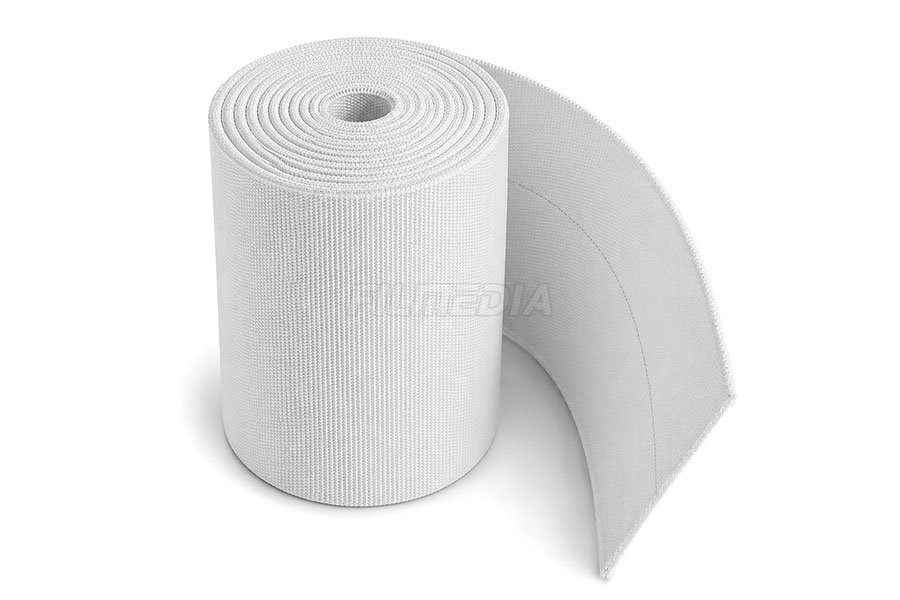
Pneumatic conveying fabric is a high-performance air-permeable fabric used in pneumatic conveying systems for powdered materials; it is also known as “air slide fabric” or “fluidization fabric.” Installed at the bottom of the conveying channel in pneumatic conveying equipment (such as air slide conveyors), it allows compressed air to pass through uniformly, fluidizing the powdered material and thereby enabling continuous, smooth, and energy-efficient transport.
Description
Specifications
| Material | 100% PET synthetic |
| Thickness | 5.5+/-0.3mm |
| Weight(Kg/m²) | 4+/-0.2 |
| Width | 200-3000mm |
| Max. resistance temp. | 200℃ |
| Air permeability | 1.9x10m³/(㎡.min.Kpa) |
| Tension | 11KN/40mm |
| Min. winding radius | R20(mm) |
| Size of powder | ≤4mm |
| Moisture | ≤2% |
Why pneumatic conveying?
- A conventional mechanical conveyor system runs in a straight line,with minimal direction changes, and each directional change typically requires its own motor and drive. The mechanical conveying system may be open rather than enclosed, potentially generating dust. It also has a relatively large number of moving parts, which usually require frequent maintenance. The system also tends to take up a lot of valuable real estate in a plant.
- On the other hand, a pneumatic conveying system uses a simple, small-diameter pipeline to transfer material. The pipeline can be arranged with bends to fit around existing equipment, giving the system more about layout flexibility, and the system also has a relatively small footprint. The system is totally enclosed and typically has few moving parts as it is electronically managed.
Applications
It is used in cement, aluminium industry, power plant, dry powder air chute, super concentration phase horizontal tank and vertical pneumatic conveying etc.